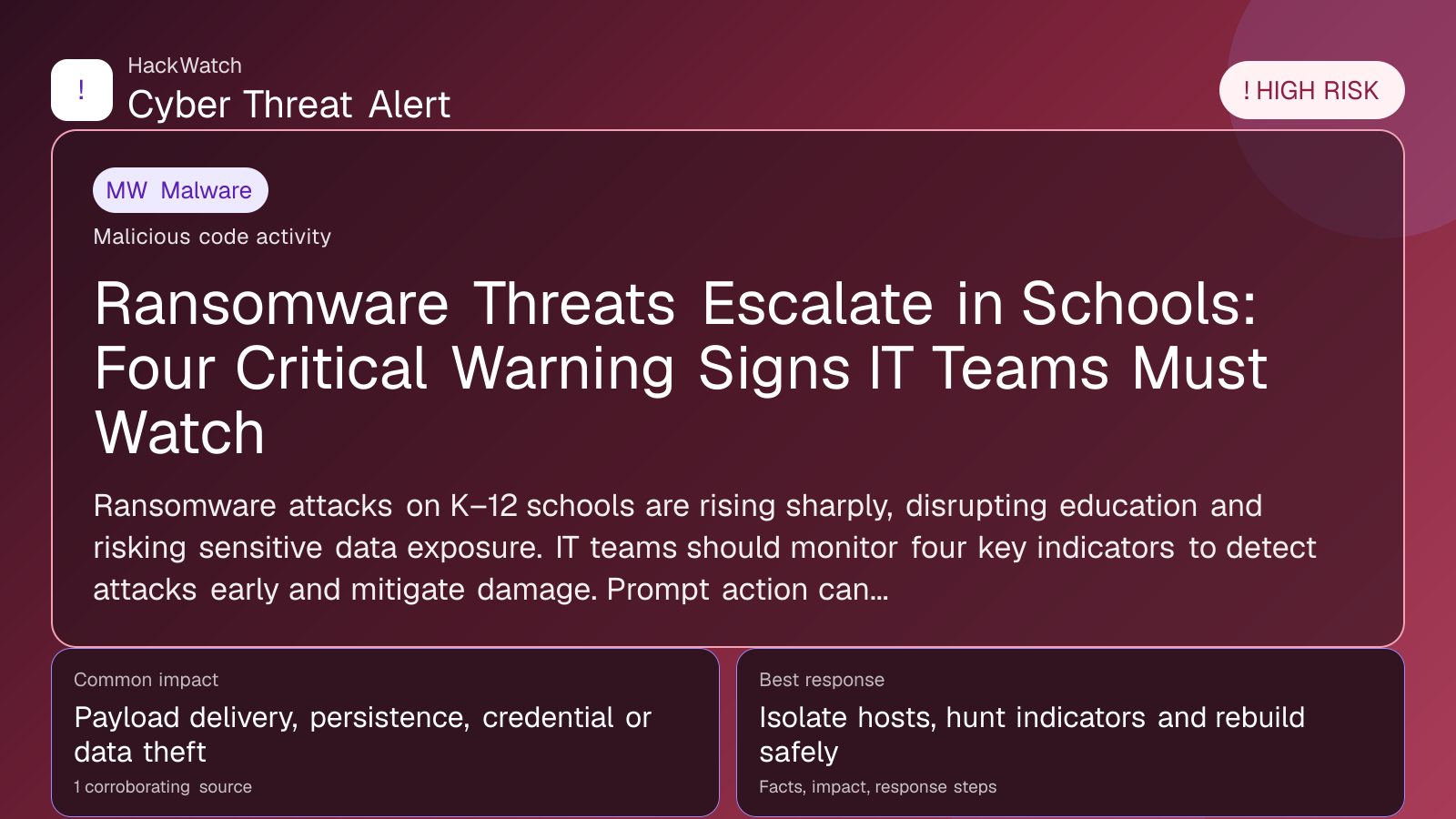
Ransomware Threats Escalate in Schools: Four Critical Warning Signs IT Teams Must Watch
Malware coverage focused on infection paths, containment steps and indicators defenders should watch.

By: Artur Ślesik
Published: Apr 30, 2026
Incident status: Active threat
Corroborating sources: 1
Technical review credentials: Security+ evidence | RHCSA evidence | JNCIS-SEC evidence
Trust note:This alert is maintained under HackWatch's editorial policy, with visible source records, a named responsible editor and a correction channel for disputed facts.
The published article is checked against public sources before publication, and material corrections are reflected in the article update date.
Technical reviewer note: Marcin Pocztowski reviewed this alert on Apr 30, 2026 for infrastructure impact, containment order and whether persistence or lateral-movement claims are supported by evidence. His administrator note is concrete: isolate the host or segment first, protect logs and network telemetry, then rebuild, rotate or patch only within the scope supported by the 1 corroborating source, the same cautious sequence he would use around managed router and server environments.
Review our editorial policy or send corrections to [email protected].
Active threat. The incident should still be treated as active until confirmed mitigation or patch adoption is verified.
Ransomware attacks on K–12 schools are rising sharply, disrupting education and risking sensitive data exposure. IT teams should monitor four key indicators to detect attacks early and mitigate damage. Prompt action can prevent prolonged outages and costly recoveries.
GLOBAL, April 30, 2026, 13:27 UTC
- Ransomware attacks increasingly target K–12 school districts, causing operational shutdowns.
- Four warning signs can help IT teams detect attacks before they escalate.
- Early detection is crucial to protect sensitive student and staff data and minimize recovery costs.
Ransomware assaults on schools have surged, with districts of all sizes facing growing threats that extend beyond IT disruptions. These attacks can halt classroom activities for days or weeks, exposing personal data and imposing heavy financial burdens on school systems, according to cybersecurity experts from ManagedMethods and Security Boulevard.
The urgency stems from the critical role schools play in communities and the sensitive nature of the data they hold. Disruptions to learning not only affect students but also strain administrative resources tasked with recovery and communication.
IT teams should be vigilant for four primary warning signs that often precede ransomware incidents. First, unusual spikes in network traffic or unauthorized access attempts can indicate an attacker probing defenses. Second, unexpected system slowdowns or crashes may signal malware activity disrupting processes.
Third, the sudden appearance of unfamiliar files or encrypted data on servers often marks the initial stages of ransomware deployment. Fourth, alerts from endpoint detection tools or antivirus software about suspicious behavior should never be ignored.
Recognizing these indicators early allows IT staff to isolate affected systems and initiate incident response protocols before encryption spreads. Schools that delay detection risk extended downtime and higher ransom demands.
The financial impact of ransomware in education is substantial. Beyond ransom payments, costs include forensic investigations, system restoration, legal compliance, and reputational damage. Some districts have reported losses running into millions of dollars.
Experts recommend that schools implement layered defenses, including regular backups stored offline, multi-factor authentication, and staff training on phishing recognition. These measures reduce the likelihood of successful attacks and improve recovery speed.
Despite these precautions, the threat landscape continues to evolve. Cybercriminals are refining tactics to exploit vulnerabilities in school IT infrastructures, often capitalizing on remote learning setups and outdated software.
The risk of data breaches adds another dimension of concern. Student records, health information, and staff credentials are valuable targets for identity theft and fraud.
Schools must also prepare for regulatory scrutiny following incidents, as data protection laws mandate timely breach notifications and remediation efforts.
While no system is impervious, proactive monitoring for the outlined warning signs can significantly mitigate ransomware risks. IT teams should integrate these indicators into their security operations centers and incident response playbooks.
In summary, the rising ransomware threat to schools demands heightened awareness and swift action. Early detection of network anomalies, system irregularities, suspicious files, and security alerts can prevent costly disruptions and safeguard sensitive data.
For schools wondering if they are affected, reviewing recent network logs and endpoint alerts is a critical first step. Immediate consultation with cybersecurity professionals is advised when warning signs emerge.
Looking ahead to 2026, experts anticipate ransomware tactics will grow more sophisticated, necessitating continuous updates to defense strategies and staff training.
Sources used for this article
securityboulevard.com